 Call Us : 08045814792Call Us : 08045814792
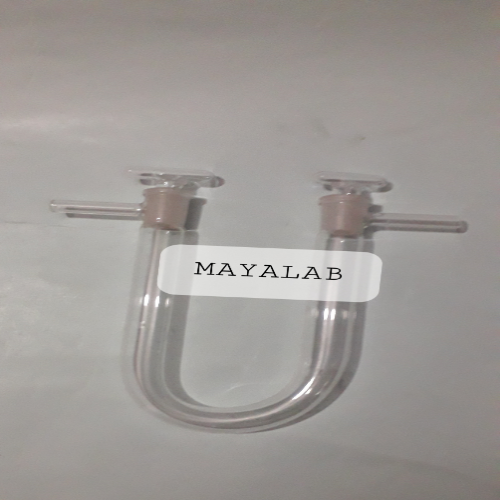
calcium chloride u tube
425.00 INR/Piece
Product Details:
- Temperature Resistance Up to 250°C
- Shape U-shaped
- Glass Type Borosilicate
- Control Type Manual Handling
- Features Chemical resistance, transparency, reusable, easy to clean
- Type U Tube
- Dimension (L*W*H) Standard Laboratory Size
- Click to View more
X
calcium chloride u tube Price And Quantity
- 425.00 INR/Piece
- 1 Piece
calcium chloride u tube Product Specifications
- Borosilicate
- Manual Handling
- Chemical resistance, transparency, reusable, easy to clean
- U Tube
- Used for drying gases, laboratory experiments, and analytical chemistry
- Borosilicate Glass
- U-shaped
- Laboratory Glassware
- Glass
- Approximately 50-100 ml (varies depending on tube size)
- Standard Laboratory Size
- Up to 250°C
- Transparent
- Lightweight (typically less than 100 g)
- Filling with calcium chloride crystals as a desiccant
- Atmospheric
- Suitable for most acids and bases except hydrofluoric acid
- Autoclavable
- Open Ends
calcium chloride u tube Trade Information
- delhi
- Cash Advance (CA), Telegraphic Transfer (T/T), Cash in Advance (CID)
- 100 Piece Per Week
- 2 Days
- Sample costs shipping and taxes has to be paid by the buyer
- BOX
- Australia, North America, South America, Eastern Europe, Western Europe, Middle East, Central America, Asia, Africa
- All India
Product Description
calcium chloride is usually used to pack drying tubes to exclude atmospheric moisture from a reaction set-up while allowing gases to escape. It can also be added to liquids to remove suspended or dissolved water. In this capacity, it is known as a drying agent or desiccant.Exceptional Chemical and Thermal Durability
Manufactured from premium borosilicate glass, the Calcium Chloride U Tube offers outstanding resistance to a broad spectrum of acids and bases (excluding hydrofluoric acid). Its structure accommodates high-temperature applications up to 250C, making it suitable for demanding laboratory environments. The tube's transparency allows effortless visual monitoring during experiments.
Simple, Effective Gas Drying Solution
This U-shaped glass tube is designed for easy manual handling, enabling the quick addition and replacement of calcium chloride crystals used as a desiccant. Open ends ensure versatile integration into various laboratory setups for drying gases or conducting analytical experiments. Its lightweight design further enhances convenience and usability during routine laboratory work.
Versatile and Reusable Laboratory Glassware
Optimized for laboratory use, the Calcium Chloride U Tube can be effectively sterilized via autoclaving, ensuring it remains reusable over multiple laboratory cycles. Its robust construction and easy-to-clean surface contribute to long service life, making it an economical choice for research labs, educational institutions, and industrial applications.
FAQ's of calcium chloride u tube:
Q: How is the Calcium Chloride U Tube used in laboratory drying applications?
A: The Calcium Chloride U Tube is filled with calcium chloride crystals, which act as a desiccant to remove moisture from gases passing through the tube. It is placed within a gas flow line to ensure dry output, critical in various analytical and experimental procedures.Q: What chemicals can safely be used with this U Tube?
A: The tube is compatible with most acids and bases due to its borosilicate glass construction but should not be exposed to hydrofluoric acid, which can attack and degrade the glass material.Q: When should the calcium chloride crystals be replaced?
A: Calcium chloride crystals should be replaced once they become saturated with moisture. This is typically noticeable when the crystals turn from white to a more translucent or wet appearance, or when the efficiency of gas drying decreases.Q: Where can the Calcium Chloride U Tube be sourced in India?
A: This product is available across India through authorized dealers, distributors, exporters, manufacturers, suppliers, traders, and wholesalers specializing in laboratory equipment and glassware.Q: What is the process for sterilizing the U Tube for reuse?
A: To sterilize, the U Tube can be cleaned, rinsed thoroughly, and then autoclaved at standard laboratory conditions, ensuring it is free from contaminants and safe for repeated applications.Q: What are the advantages of using borosilicate glass for this U Tube?
A: Borosilicate glass offers excellent chemical resistance, durability at high temperatures (up to 250C), and optical clarity, making it ideal for repetitive laboratory tasks where chemical exposure or thermal cycling is common.Tell us about your requirement

Price:
Quantity
Select Unit
- 50
- 100
- 200
- 250
- 500
- 1000+
Additional detail
Mobile number
Email


Address
MAYALAB INSTRUMENT
GST : 06EKTPK9532G1ZM
GST : 06EKTPK9532G1ZM
- House No - 108, Milap Nagar, Vill Nanhera Post Office, Kuldeep Nagar,Ambala Cantt - 133004, Haryana, India
- Phone :08045814792
- Send Inquiry
 Send Inquiry
 Send Inquiry
 Send SMS
 Call Me Free
 |
MAYALAB INSTRUMENT
All Rights Reserved.(Terms of Use) Developed and Managed by Infocom Network Private Limited. |
