 Call Us : 08045814792Call Us : 08045814792
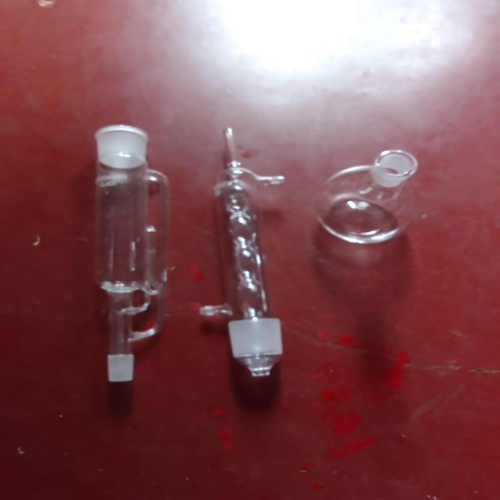
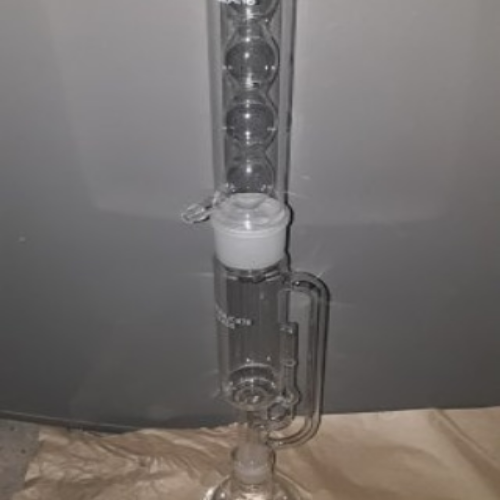
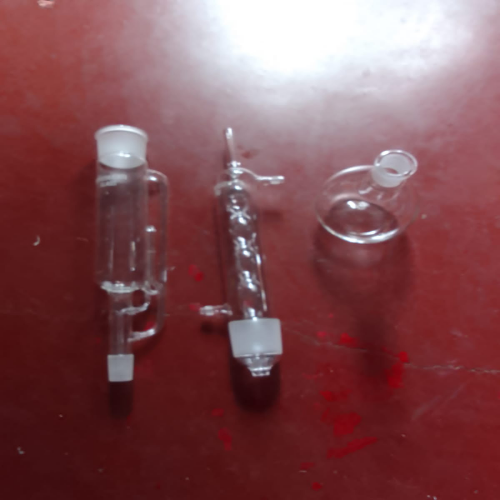
soxhlet extraction apparatus
950.00 INR/Piece
Product Details:
- Temperature Resistance Up to 350°C
- Display Type No digital display, analog operation
- Shape Cylindrical body with round boiling flask and condenser
- Features Corrosion resistant, heatproof, easy to assemble and clean, leak-resistant joints
- Power Supply Single phase, AC Supply
- Control Type Manual/Analog control
- Speed Range Steady flow, designed for accurate reflux cycles
- Click to View more
X
soxhlet extraction apparatus Price And Quantity
- 950.00 INR/Piece
- 950.00 - 1100.00 INR/Piece
- 1 Piece
soxhlet extraction apparatus Product Specifications
- 220V – 240V AC
- No digital display, analog operation
- Extraction of solvents from solid material, laboratory sample analysis
- Up to 350°C
- 100ml, 250ml, 500ml, 1000ml (varies by model)
- Borosilicate glass, Stainless Steel
- Single phase, AC Supply
- Manual/Analog control
- High-quality, heat resistant borosilicate glass and metal fittings
- Electrical heating mantle (commonly 100W – 500W, depending on capacity)
- Corrosion resistant, heatproof, easy to assemble and clean, leak-resistant joints
- Laboratory Extraction Equipment
- Cylindrical body with round boiling flask and condenser
- Borosilicate glass (ISO/ASTM standard)
- Steady flow, designed for accurate reflux cycles
- Standard sizes as per laboratory requirements
- Adjustable, suitable for continuous extraction
- Consistent extraction and solvent recovery
- Soxhlet Extraction Apparatus
- Up to 50g depending on thimble and flask
- Benchtop
- Varies by assembly; compatible with multiple flask sizes
- Safely packed in thermocol and cardboard box for shipping
- Excellent (compatible with wide range of solvents)
- Borosilicate glass – high wall thickness
- Liebig or Allihn condenser available
- Compliant to IS/ISO, ASTM standards for laboratory extraction
- Cellulose or glass fiber (optional)
- Standard ground joint sizes 24/29, 34/35 as per IS/ISO
- Modular and replaceable components
- Atmospheric pressure
soxhlet extraction apparatus Trade Information
- delhi
- Cash Advance (CA), Telegraphic Transfer (T/T), Cash in Advance (CID)
- 250 Piece Per Month
- 2 Days
- Sample costs shipping and taxes has to be paid by the buyer
- BOX
- Australia, North America, South America, Eastern Europe, Western Europe, Middle East, Central America, Asia, Africa
- All India
Product Description
Soxhlet extraction is exhaustive extraction technique widely applied to analytes that are sufficiently thermally stable. the extraction solvent is continuously cycled though the matrix,by boiling and condensation ,with the sample being collected in the hot solvent.Robust Construction for Diverse Applications
Built from premium heat-resistant borosilicate glass and stainless steel, the Soxhlet extraction apparatus is designed to withstand challenging laboratory conditions and a wide range of solvents. Its robust construction makes it ideal for research, quality control, and routine analysis, especially in pharmaceutical, environmental, and food laboratories.
Flexible and Modular Design
Offering modular, easily replaceable components and compatibility with various flask sizes (from 100ml to 1000ml), this Soxhlet extractor accommodates different sample and solvent volumes. Its versatile design enables seamless switching between cellulose or glass fiber thimbles, meeting a spectrum of scientific extraction requirements.
Efficient, Reliable Extraction
Engineered for precise, steady extraction cycles, the apparatus achieves consistent solvent recovery and sample processing, thanks to its reliable atmospheric pressure operation and adjustable heating mantle (100W-500W). All elements promote leak resistance and easy assembly, ensuring dependable results in every laboratory setting.
FAQ's of soxhlet extraction apparatus:
Q: How does the Soxhlet extraction apparatus operate for sample extraction?
A: The Soxhlet extraction apparatus operates by continuously cycling solvent through the solid sample in a thimble using a boiling flask and a condenser (Liebig or Allihn type). The solvent dissolves desired compounds during each cycle, and the process repeats until extraction is complete, ensuring efficient transfer of analytes from the solid matrix.Q: What types of samples and solvents can be used with this apparatus?
A: This apparatus can process up to 50g of solid material, depending on the thimble and flask size, and is compatible with a wide range of solvents due to its chemical-resistant borosilicate glass construction. Common applications include plant extractions, pharmaceutical testing, and environmental sample analysis.Q: When is it recommended to choose between Liebig or Allihn condenser types?
A: Liebig condensers are generally suitable for extractions involving simple cooling needs or lower solvent vapor rates, while Allihn condensers are preferred for higher efficiency with greater surface area for condensation, making them suited for extractions with volatile solvents or when efficient cooling is necessary.Q: Where should this Soxhlet extraction system be installed and used?
A: The apparatus is designed for benchtop mounting in laboratory environments. It should be set up in well-ventilated, safe lab spaces, such as research, industrial, or academic laboratories, ensuring stable access to electrical supply (220V-240V AC) and suitable exhaust for solvent fumes.Q: What is the process of assembling and cleaning the Soxhlet apparatus?
A: Assembly involves connecting modular, ground-joint components such as the boiling flask, extractor body, and condenser using leak-resistant joints. Disassembly and cleaning are straightforward due to the apparatus's modularity and high-quality materials, making it easy to maintain between uses.Q: How does this equipment benefit laboratory extraction procedures?
A: The apparatus provides consistent, reproducible extraction with efficient solvent recovery, thanks to its adjustable heating mantle and precise reflux cycle. Its compliance with IS/ISO and ASTM standards ensures data reliability, while robust construction and chemical resistance allow prolonged, safe use in intensive settings.Tell us about your requirement

Price: Â
Quantity
Select Unit
- 50
- 100
- 200
- 250
- 500
- 1000+
Additional detail
Mobile number
Email

Other Products in 'soxhlet apparatus' category

Address
MAYALAB INSTRUMENT
GST : 06EKTPK9532G1ZM
GST : 06EKTPK9532G1ZM
- House No - 108, Milap Nagar, Vill Nanhera Post Office, Kuldeep Nagar,Ambala Cantt - 133004, Haryana, India
- Phone :08045814792
- Send Inquiry
 Send Inquiry
 Send Inquiry
 Send SMS
 Call Me Free
 |
MAYALAB INSTRUMENT
All Rights Reserved.(Terms of Use) Developed and Managed by Infocom Network Private Limited. |
